
Blog
How to automate lead tracking well

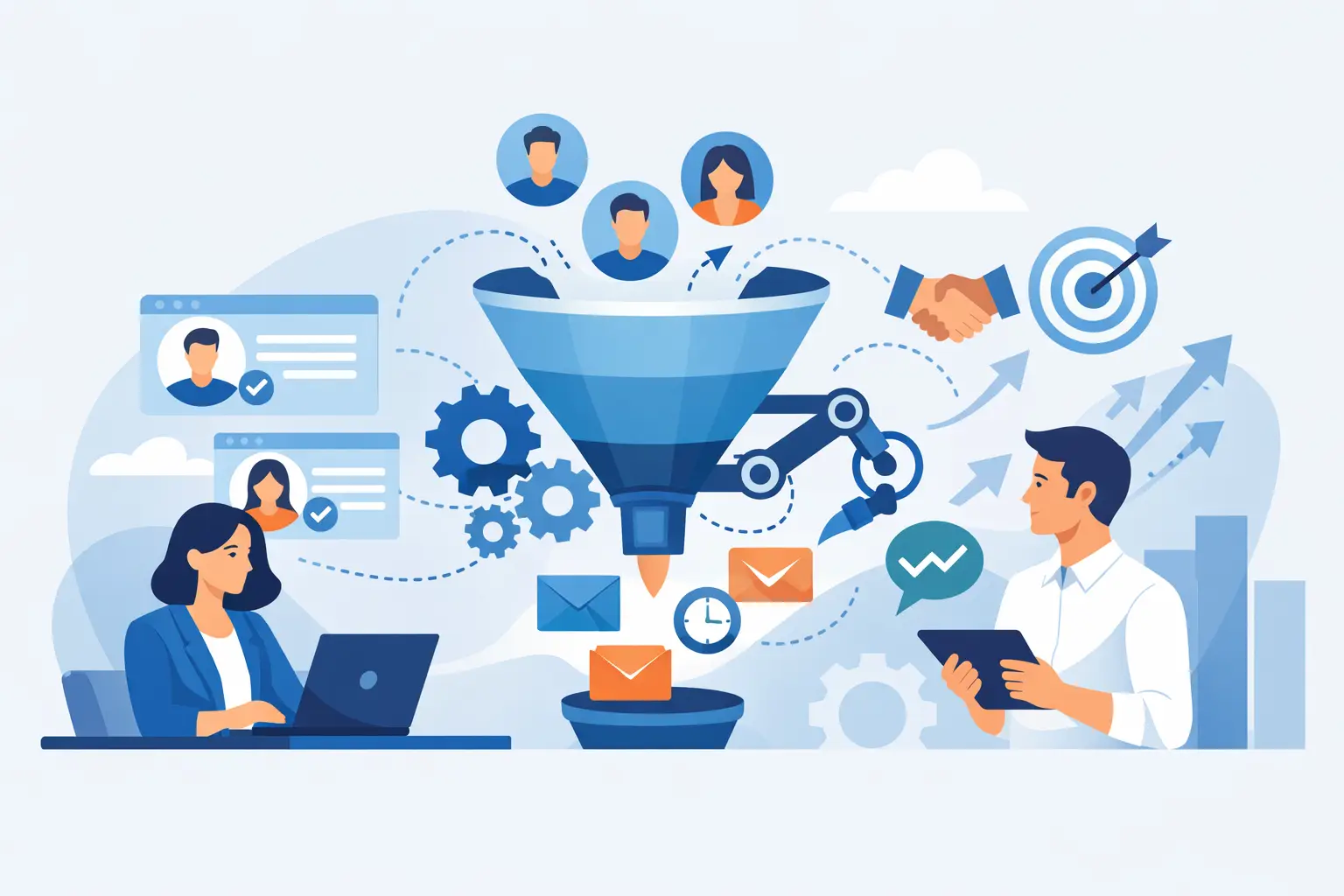
A lead that requests information today and receives a response two days later is no longer warm. They are comparing prices with another provider, talking to their team, or directly buying elsewhere. That's why understanding how to automate lead follow-up isn't a technical issue or a marketing trend. It's a business decision that impacts sales, operational time, and growth capacity.
Most companies don't miss opportunities due to a lack of market interest, but rather due to slow, dispersed, or manual processes. Forms that arrive in an inbox that nobody checks on time, unclassified WhatsApp messages, incomplete databases, and salespeople chasing leads without context. When follow-up relies solely on memory, goodwill, or improvisation, the funnel breaks.
Automation doesn't mean turning a business relationship into a cold sequence of messages. It means designing a system that responds quickly, prioritizes better, and engages the lead at the right time. When implemented well, this system improves the prospect's experience and gives the sales team something that is scarce in many companies: focus.
What does automating lead tracking really mean
When we talk about automation, we're not just talking about sending automatic emails. We're talking about connecting lead generation, qualification, response, and follow-up within a clear logic. If someone completes a form, downloads a resource, writes on social media, or requests a quote, the system should register that contact, assign it a tag, trigger an initial response, and flag the next action.
This process can be simple or advanced, depending on the volume of leads and the complexity of the sale. A small to medium-sized business with few channels can achieve a lot with a CRM, a well-configured form, and two or three automated workflows. A company with active campaigns in Google Ads, Meta Ads, web, chat, and WhatsApp require a more comprehensive architecture, with cross-platform integration, scoring, and prioritization rules.
The key is not to automate for the sake of automating. If the sales process is confusing, technology will only scale the mess. Before thinking about tools, you need to define what should happen from the moment a lead comes in until it moves forward, is discarded, or is reactivated.
How to automate lead tracking without losing sales quality
The first step is to organize the entry points. Many companies generate leads from various channels, but they all arrive in different ways and without a common structure. A web lead might go to an email, a Meta lead to a spreadsheet, and a WhatsApp lead might stay on an advisor's mobile. This makes it impossible to measure, prioritize, or scale.
It's recommended to centralize input into a CRM or a platform that acts as a single source of truth. The brand of the tool matters less at the beginning than its ability to record data, automate tasks, and connect with your current channels. Name, company, source, interest, estimated budget, and level of intent are much more useful data points than a large but context-free database.
Next comes initial segmentation. Not all leads deserve the same treatment or the same speed of follow-up. Some request a demo, others just ask for a ballpark price, and some are still comparing options. If everyone is responded to the same way, the sales team ends up spending too much time on unprepared contacts and too little on those who are ready to move forward.
Here comes basic but very profitable automation: rules that classify leads according to origin, service of interest, or action taken. If someone requests a proposal, a priority alert should be triggered. If someone downloads a guide, perhaps a nurturing flow before a sales call is the right approach. If they come from a high-intent search campaign, response time should be minimal.
The correct sequence: response, rating, and next step
One of the most common mistakes is thinking that follow-up begins several days after the first contact. In reality, it begins the very minute the lead enters the system. The first response doesn't need to close a sale, but it should confirm receipt, convey professionalism, and make the next step clear.
That first contact can be automated via email, WhatsApp, or both, as long as the message sounds human and aligns with the business promise. A generic text is of little use. A response that acknowledges the request, provides context, and anticipates timelines works best. For example, saying “We have received your message” is not the same as saying “Thank you for requesting information about your online store. Our team will review your case and contact you during the next time block with a proposed next step.”.
After, automation should help with qualification. This can be done with smart forms, pre-qualifying questions, automatic tagging, or even conversational assistants. The goal is for the sales team not to start every conversation from scratch. If they already know which service is of interest, which channel generated the contact, and how urgent the lead is, the conversation moves faster and more accurately.
The next step should also be automated. If there is no response from the salesperson within a certain time, an alert should be triggered. If the lead does not open the email, a second message can be sent through another channel. If they request a call, the system should facilitate calendar booking or automatic assignment. Automation does not replace the salesperson's judgment, but it does prevent opportunities from going cold due to a lack of action.
Which processes are best to automate first
There's no need to transform the entire funnel at once. In fact, trying to automate every detail from day one usually creates more friction than results. The most cost-effective approach is to start with the areas where you're currently losing the most sales or wasting the most time.
In many companies, that happens on three fronts. The first is lead capture and registration. The second is the initial response. The third is following up with contacts who don't buy on the first interaction. If a company improves just these three stages, it can already notice a clear rise in sales speed and conversion.
Additional layers can be incorporated later on, such as lead scoring, behavior-based sequences, reactivation of old opportunities, or CRM-connected chatbots. It also makes sense to automate reports so that sales management and marketing can see which sources generate the best opportunities, how long each advisor takes to respond, and where contacts are being lost.
That said, there's an important nuance: not all businesses need the same level of automation. In complex or high-ticket sales, automating too much can sound impersonal. In those cases, it's advisable to automate internal tasks, reminders, qualification, and pre-diagnosis, but leave the value-driven conversation in the hands of the human team.
Tools, data, and errors that tend to slow down a system
The right tool is the one that fits your actual operation, not the one with the most features in a demo. If your team doesn't use it, doesn't document progress, or doesn't understand the workflow, the investment loses its meaning. That's why it's advisable to choose solutions that integrate CRM, automation, and traceability without requiring an excessive learning curve.
Discipline with data is also necessary. An automated system depends on clean information. If the lead source is mislabeled, if important fields are left empty, or if each salesperson updates in their own way, then neither measurement nor optimization is possible. Automation needs a consistent operational foundation.
Another common mistake is writing overly generic sequences. The lead immediately notices when they receive messages that could be sent to anyone. Personalization doesn't require writing them one by one, but it does require adapting the tone, content, and call to action according to the service, stage, and intention. That's where a well-designed strategy makes a difference.
In more advanced projects, the artificial intelligence It can bring a lot of value. It can help categorize conversations, detect intent, summarize interactions, assist the sales team, and trigger responses based on context. However, it's best used to support a clear process, not as a patch for a messy operation. AI speeds up what is already well-defined. If the funnel is broken, it will only make the problem happen faster.
Automation with business vision, not just marketing
Automating lead tracking is not an isolated task for the marketing department. It affects sales, customer service, management, and profitability. When the process is well-designed, the company responds faster, prioritizes better, sells with more context, and reduces reliance on manual tasks. This improvement isn't just seen in efficiency. It's seen in more opportunities being handled and a better closing rate.
At CLICK Digital, we work on these types of processes as part of a Complete strategy, where lead generation, conversion, and automation must work together. Because generating leads without a clear follow-up methodology often ends with the same problem: more advertising investment, but not necessarily more sales.
If your company is still dealing with contacts in spreadsheets, scattered notes, and late responses, you don't need more effort. You need a more thoughtfully designed system. That's where sustainable growth begins.
