
Blog
How to automate customer follow-up effectively

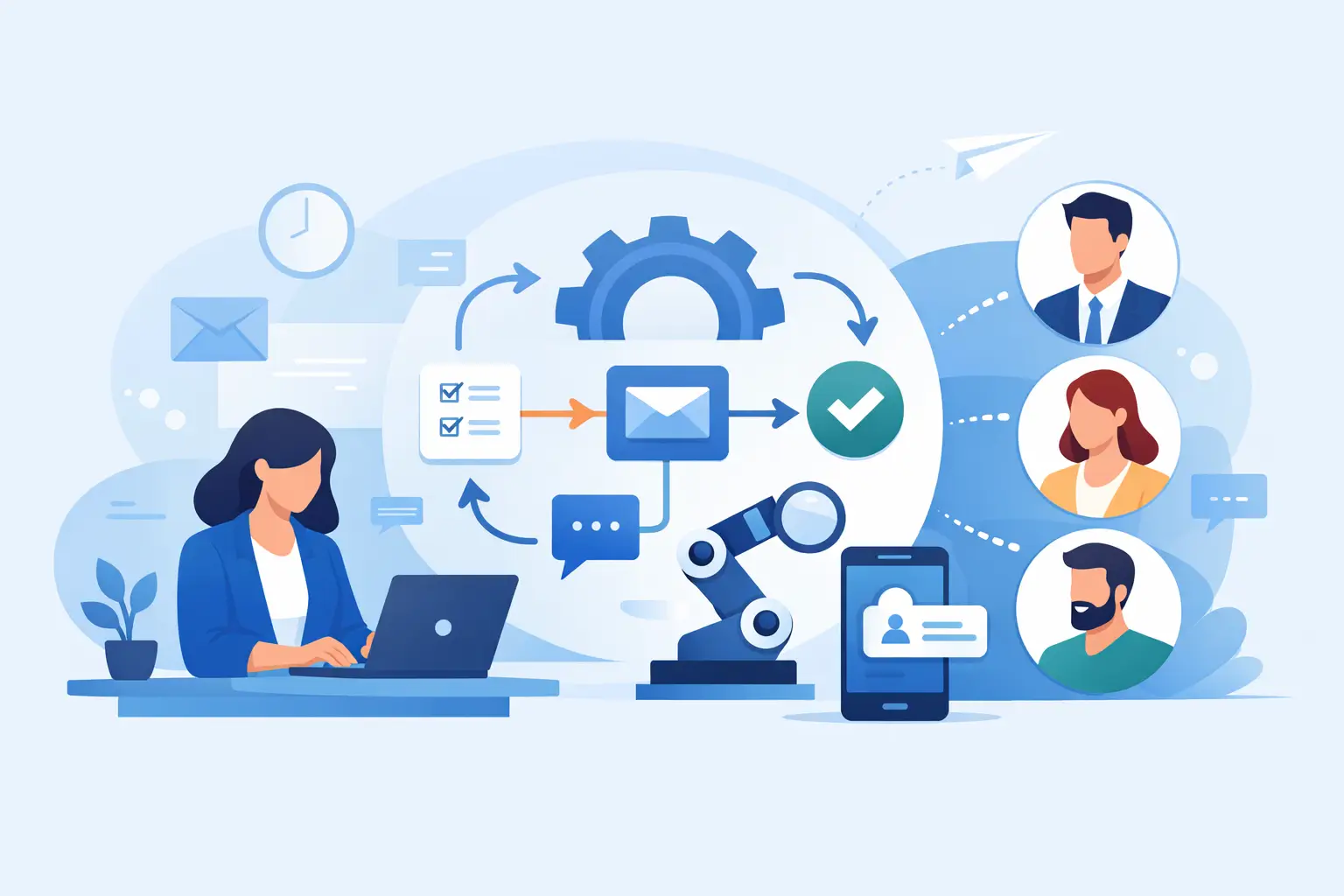
One lead requests information at 10:43 AM, another fills out a form at the end of the day, and a third responds via WhatsApp two days later. If your team is still managing all of this with spreadsheets, random reminders, and manual messages, the problem isn't a lack of opportunities. The problem is not having a clear way to automate customer follow-ups without losing speed, order, or business context.
Automating follow-up doesn't mean turning your prospect relationships into a string of cold replies. It means designing a process so that each contact receives the right action at the right time, while your sales team dedicates time to closing deals, not chasing repetitive tasks. When done well, it improves response rates, reduces leaks in the funnel, and provides real visibility into which channel is generating business.
Automating customer tracking
In practice, automating follow-up involves defining rules, triggers, and sequences so that a system can execute business actions without relying on a person to remember every step. These actions can include sending a welcome email, assigning a lead to the right salesperson, creating a follow-up task, triggering a WhatsApp message, or moving a contact to a different stage in the CRM.
The key is to understand that automation does not replace business strategy. It reinforces it. If the sales process is confusing, automating it will only make the mess happen faster. Therefore, before thinking about tools, it's worth reviewing how a lead enters, how long it takes to receive a response, what follow-up it needs, and at what point it's considered ready to buy.
Why do many companies automate poorly
The most common mistake is wanting to solve everything with a single sequence of messages. Not all leads have the same intention or the same pace. A contact who asks for a quote needs different follow-up than someone who downloaded a guide or interacted with an ad without leaving too much information.
Implementation also fails a lot when marketing and sales work separately. Marketing generates leads, sales receives them late, and nobody knows what happened between one and the other. Automation works best when it connects acquisition, qualification, follow-up, and closing within the same flow.
Another delicate point is excessive messaging. Automating does not equate to chasing the prospect across all channels at once. If a business sends an email, then a WhatsApp message, then an SMS, and also calls on the same day, it can seem more invasive than efficient. Balance matters here.
How to Automate Customer Follow-up Step-by-Step
The first step is to map out the actual lead journey. Not the ideal one from a presentation, but the one that's happening today. Do they come in through a web form, social media, paid campaigns, a call, or a chatbot? Who responds first? How long does it take? What happens if they don't respond? How many contact attempts are made before abandoning the opportunity? Without that map, any automation is born incomplete.
Then you need to segment. This part makes the difference between a useful automation and one that generates noise. You can segment by lead source, service of interest, location, website behavior, urgency level, or previous interaction. A user who requests a demo should trigger more direct follow-up than someone who only subscribed to a newsletter.
Disparadores y acciones son los componentes básicos de la automatización. Un disparador (o "trigger") es un evento que inicia una automatización. Una acción es una tarea que se realiza como resultado de un disparador.
Once the contacts are segmented, it's time to decide what should happen automatically. If a lead completes a contact form, the system can send an immediate confirmation, record their data in the CRM, and assign them to a sales executive. If that lead doesn't respond within 24 hours, a second message can be triggered. If they open an email but don't schedule a meeting, they can enter a different sequence.
The goal isn't to create a complex system from the start. It's best to begin with the areas where the most time or sales are currently being lost. These are typically three: initial response, follow-up reminders, and re-engagement of cold opportunities.
Build sequences with business logic
A good sequence not only considers frequency, but also intent. During the initial phase, speed is usually decisive. In a second phase, the value of the message gains weight. Later on, persistence must be accompanied by context.
For example, if a prospect requested information about a specific service, follow-up can include an initial confirmation message, a second contact with a consultative approach, and a third to facilitate decision-making with a proposal or a call. If there's no response, instead of insisting with the same text, it's advisable to change the angle: address objections, offer another channel, or ask if the timing isn't right.
Tools that usually are involved in the process
This isn't about accumulating software, but about integrating pieces with discernment. The usual approach is to combine a CRM, an automation platform, web forms, email, WhatsApp Business, and in some cases, chatbots or AI agents for the first attention.
The CRM is the hub. Without a good record of stages, activity, and lead source, automation loses traceability. The automation platform executes rules and sequences. Forms capture data. WhatsApp and email initiate conversations. And artificial intelligence can help classify leads, answer frequently asked questions, or route contacts with higher sales intent.
Not all companies need the same level of complexity. A small or medium-sized business with a moderate volume of leads can achieve solid results with a simple, well-configured flow. A company with multiple channels, multiple salespeople, and longer sales cycles does require a more carefully designed architecture.
How to automate customer follow-up without losing closeness
This is the point that most concerns sales managers and business owners, and rightly so. If everything sounds automatic, the experience suffers. The solution isn't to go back to manual, but to personalize better.
Use real contact data to tailor messages, but don't stop at just the name. True personalization means talking about the service they requested, the problem they want to solve, or the channel they came from. It also helps to clearly define when a person should intervene. There are times when automation is advisable and others that require human judgment, especially when objections, negotiations, or more significant decisions arise.
AI can contribute a lot here, as long as it is well trained and defined. It's useful for responding quickly, filtering intent, and maintaining continuity outside of business hours. However, if the business sells consultative solutions, it's recommended to use it as a support, not as a total substitute for the team.
Metrics That Actually Matter
Automating for the sake of automation doesn't make sense. You have to measure business impact. Average response time is one of the first variables to monitor, because it directly affects the likelihood of contact. It's also useful to observe conversion rates by stage, the percentage of leads handled, the recovery of inactive opportunities, and the volume of manual tasks eliminated.
Also, it's worth comparing performance by channel. Not all leads require the same follow-up or convert equally. Sometimes an email sequence works better for B2B services with longer cycles, while WhatsApp speeds up closures in more direct processes.
If automation is well-designed, it's not only noticeable in productivity. It's noticeable in revenue. That's the real benchmark.
Mistakes to avoid from the start
There are several recurring failures. One is not cleaning the database and working with duplicate or poorly classified contacts. Another is automating messages without defining a sales representative. It also often happens that the system sends actions, but no one reviews the results or adjusts the rules.
A particularly costly error is failing to align promises and follow-up. If your advertisement offers an immediate response and the automated flow takes hours to activate, you've already lost some trust. And if the automated message doesn't match the tone or the commercial offer, the experience becomes fragmented.
That's why automation needs strategy, technical setup, and continuous monitoring. That's precisely where a comprehensive approach makes a difference. In projects managed with a 360-degree vision, like those we develop at CLICK Digital, automation isn't treated as an isolated piece but as part of the system that connects lead generation, sales, and operations.
When is it a good time to start
The short answer is before the chaos grows. Many companies wait until they have a large volume of leads to automate, when in reality, the sensible thing to do is to automate as soon as manual follow-up starts causing delays, oversights, or over-reliance on a single person.
There's no need to start with twenty streams. It's enough to identify a priority path, configure it well, and optimize it with data. The best automation isn't the most sophisticated, but the one that moves more opportunities forward without adding friction.
If your business already invests in advertising, content, SEO or social media, but tracking remains manual, there's a clear leak between demand generation and sales. Solving it may cost less than you imagine and yield considerably more than you're currently measuring.
Automating well means structuring growth. And when every lead receives timely attention, with context and clear commercial intent, sales become less reliant on improvisation.
