
Blog
GEO in marketing refers to **geographic targeting**. It's a strategy where marketers focus their advertising and promotional efforts on specific geographic locations. This can range from a country, state, or city, down to a particular neighborhood, postal code, or even a radius around a physical store. **What it's used for:** * **Reaching Local Customers:** For businesses with physical locations (restaurants, retail stores, service providers), GEO marketing is crucial for attracting customers in their immediate vicinity. * **Tailoring Campaigns:** Marketers can customize their messaging, offers, and promotions based on the local culture, demographics, or specific needs of a particular geographic area. * **Improving ROI:** By focusing on relevant audiences, businesses can reduce wasted ad spend on people who are unlikely to become customers, thus improving their return on investment. * **Competitor Analysis:** Understanding where competitors are active geographically can inform strategic decisions. * **Event Promotion:** Promoting local events, sales, or new store openings to residents within a specific radius. * **Personalized Experiences:** Delivering personalized ads or content based on a user's current location (e.g., "weather-appropriate clothing" ads when it's raining in their area).

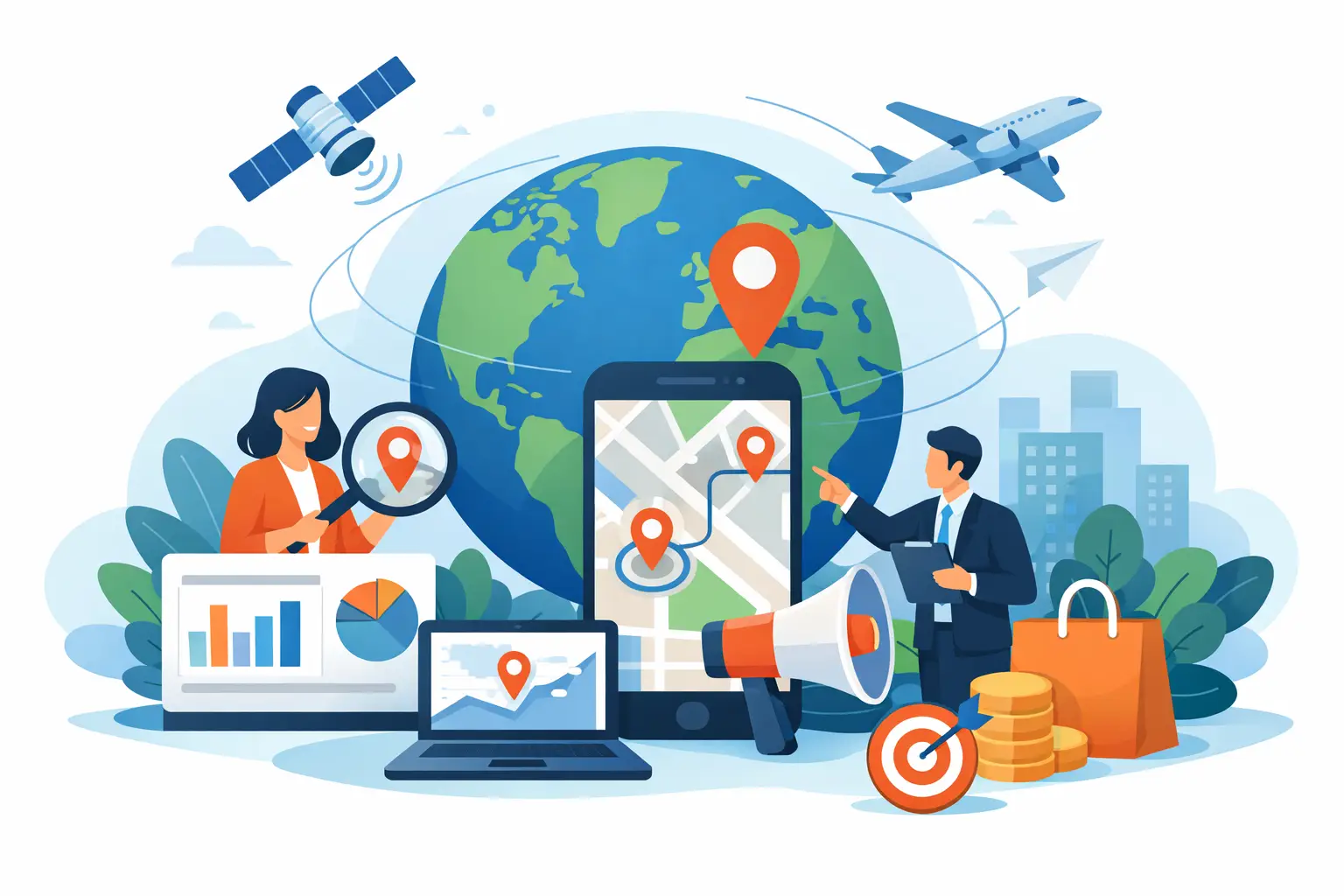
There are companies that invest in advertising, social media, and websites, but they continue to speak to everyone as if their ideal client could be anywhere. This raises a key question: what is GEO in marketing and why is it increasingly important for customer acquisition? The short answer is simple: GEO refers to the use of geographic location as a strategic criterion for segmenting, personalizing, and optimizing marketing actions.
It's not just about showing an ad in a specific city. When done well, a geographic approach helps decide where to advertise, what message to use, what offer to prioritize, and how to adapt the digital experience to the reality of each area. For a small to medium-sized business, an e-commerce store, a chain with multiple locations, or a brand operating in different markets, this can make the difference between generating generic clicks or attracting real sales opportunities.
What is GEO in marketing
When we talk about GEO in marketing, we're referring to geolocation, geographic segmentation, and territorial analysis applied to commercial strategy. In other words, it's about using user or market location data to make better marketing decisions.
That location can be interpreted in several ways. Sometimes it's the real-time location of a person from their mobile phone. Other times it's a residential area, a city, a province, a country, or even a specific radius around a business. In all cases, the goal is the same: to be more relevant.
A restaurant doesn't need to appeal to users in another region if it's seeking reservations for tonight. A private clinic can focus its investment on people who live or work nearby. An e-commerce business, on the other hand, might want to expand its reach but should adjust campaigns based on demand, logistical costs, or behavior by area. GEO is not an isolated tactic. It's a strategic layer that improves budget allocation and how messages connect with a user's actual intent.
GEO in marketing is used to target specific geographic locations. This allows businesses to tailor their marketing campaigns to the needs and preferences of customers in particular regions, cities, or even neighborhoods. For example, a restaurant might use GEO targeting to advertise lunch specials to people who work nearby, or a clothing store might promote winter coats to customers in colder climates.
The main utility of GEO is in reducing waste and increasing accuracy. In digital marketing, reaching more people doesn't always mean selling more. It often means paying more for unqualified audiences.
With a well-planned GEO strategy, a company can concentrate its efforts in the places where it has the most potential to convert. This is useful for Google Ads and Meta Ads campaigns, Local SEO, in-store promotions, regional launches, and location-based automations.
It also allows for adapting the message. The same ad doesn't always work in every area. There are markets where price carries more weight, others where delivery speed is important, and others where local trust is decisive. When communication reflects that context, the response usually improves.
Another relevant point is measurement. Analyzing results by location helps to detect which territories are responding better, where there is latent demand, and where it is advisable to adjust investment, creativity, or the commercial proposal.
How does a GEO strategy work
The logic is quite straightforward. First, you define which geographical area you're interested in. Then, you cross-reference business data, customer behavior, and commercial objectives. From there, you activate specific campaigns, content, or actions for each zone.
In digital advertising, for example, a campaign can be configured to be shown only to users within a 10-kilometer radius of a point of sale. You can also exclude areas where service is not available or where the cost per acquisition is not worth it.
In SEO, the GEO approach is reflected in searches with local intent, such as when a user searches for a service “near me” or adds a city to the search term. It's not enough to rank a website here. You need to work on business listings, local pages, adapted content, and territorial relevance signals.
In automation, the GEO can trigger distinct responses based on the lead's origin. A user from a specific city might receive a targeted offer, opening hours for a nearby branch, or a sales flow tailored to their region. This type of personalization enhances the experience and reduces friction in the sales process.
Channels where GEO adds more value
Not all companies apply it in the same way, but there are channels where the impact is usually especially clear.
In Google Ads, geographic targeting allows for much better budget optimization. If a company knows its best customers come from certain cantons, districts, or cities, it can bid more aggressively there and reduce investment where performance is low.
In local SEO, GEO targeting is decisive for businesses that depend on nearby visibility. Clinics, restaurants, offices, shops, academies, or technical services need to appear when a user searches for a solution in their area. Here, proximity isn't a detail; it's part of the purchase intent.
On social media, geolocation helps with both campaigns and organic content. An event, an opening, or a promotion with limited territorial coverage becomes more effective when communicated to the right audience.
In e-commerce, even if a business sells nationally, geographic analysis can reveal very useful patterns. There are areas where certain categories sell better, regions where logistics costs force a rethinking of the offering, or cities where campaigns should be reinforced due to high demand.
Real benefits for businesses and brands
The first benefit is efficiency. If a company concentrates its investment in areas with greater potential, it improves returns and avoids spreading itself too thin. This is especially important for SMEs with tight budgets.
The second is relevance. A message aligned with the user's location usually feels more useful and less generic. This increases the probability of a click, contact, or purchase.
The third is expandable capacity with discernment. GEO not only serves local businesses. It also helps to scale. A brand that wants to grow can identify priority territories, validate demand in phases, and enter new areas with data, not intuition.
Furthermore, it provides business clarity. When it's understood which areas generate the best results, better operational decisions are also made: where to open a new branch, where to strengthen customer service, where to launch a promotion, or where to adjust service coverage.
What is GEO in marketing versus targeting by interests
It's important to make a distinction here. Segmenting by interests and segmenting by location are not mutually exclusive. They complement each other.
Interest-based segmentation attempts to detect what a user likes or what kind of behavior they have. GEO segmentation adds context. It's not the same to impact someone interested in fitness in a large city as in a rural area. It's also not the same to sell to a user who lives five minutes from the business as to one who lives an hour away.
Therefore, the best campaigns usually combine both layers. Interests, search intent, demographics, and location work better together than separately. When a company uses only one variable, it oversimplifies market reality.
Common mistakes when applying GEO
One of the most common mistakes is thinking that GEO is only useful for physical businesses. This is not true. Any company that operates in different territories can benefit from a geographic market analysis.
Another error is segmenting too early and in too much detail. If the data volume is low, splitting campaigns by tiny zones can complicate management without providing sufficient learning. Sometimes it's advisable to start with broad regions, validate performance, and then refine.
Also, whoever limits Geo to the technical configuration of a campaign fails. Location should not only affect where an ad appears, but also the message, the offer, the landing page, and the commercial tracking.
And there's a pretty common strategic mistake: ignoring exclusions. Knowing where it's not advisable to invest is as valuable as identifying where it is.
When is it worth betting on GEO?
It's almost always worth it when location influences sales, delivery, customer service, or customer intent. If your business has limited coverage, physical locations, variable costs by area, or differences in demand between territories, GEO stops being optional and becomes a growth tool.
It's also especially useful when campaigns generate traffic but few conversions. In many cases, the problem isn't just with the ad or the website, but rather that the message is being shown in unprofitable places or places that are not aligned with the actual business operations.
A well-executed strategy demands data, business acumen, and technical skill. Simply activating a city-based segmentation and waiting for results isn't enough. You need to interpret which territories provide value and how to integrate them into a broader acquisition, conversion, and optimization strategy. That's where a comprehensive approach, like the one we work on at CLICK Digital, helps turn geography into real sales.
If your company wants to grow with more control, less waste, and better-targeted campaigns, understanding what GEO is in marketing isn't a technical curiosity. It's a smarter way to be present where your opportunities truly lie.
